What Was The First Car? A Quick History of the Automobile for Young People
by William W. Bottorff
Several Italians recorded designs for wind driven vehicles. The first was Guido da Vigevano in 1335. It was a windmill type drive to gears and thus to wheels. Vaturio designed a similar vehicle which was also never built. Later Leonardo da Vinci designed a clockwork driven tricycle with tiller steering and a differential mechanism between the rear wheels.
A Catholic priest named Father Ferdinand Verbiest has been said to have built a steam powered vehicle for the Chinese Emperor Chien Lung in about 1678. There is no information about the vehicle, only the event. Since Thomas Newcomen didn't build his first steam engine until 1712 we can guess that this was possibly a model vehicle powered by a mechanism like Hero's steam engine, a spinning wheel with jets on the periphery. Newcomen's engine had a cylinder and a piston and was the first of this kind, and it used steam as a condensing agent to form a vacuum and with an overhead walking beam, pull on a rod to lift water. It was an enormous thing and was strictly stationary. The steam was not under pressure, just an open boiler piped to the cylinder. It used the same vacuum principle that Thomas Savery had patented to lift water directly with the vacuum, which would have limited his pump to less than 32 feet of lift. Newcomen's lift would have only been limited by the length of the rod and the strength of the valve at the bottom. Somehow Newcomen was not able to separate his invention from that of Savery and had to pay for Savery's rights. In 1765 James Watt developed the first pressurized steam engine which proved to be much more efficient and compact that the Newcomen engine.
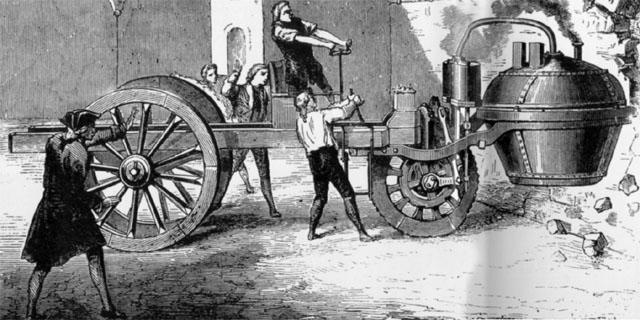
The first vehicle to move under its own power for which there is a record was designed by Nicholas Joseph Cugnot and constructed by M. Brezin in 1769. A replica of this vehicle is on display at the Conservatoire des Arts et Metiers, in Paris. I believe that the Smithsonian Museum in Washington D. C. also has a large (half size ?) scale model. A second unit was built in 1770 which weighed 8000 pounds and had a top speed on 2 miles per hour and on the cobble stone streets of Paris this was probably as fast as anyone wanted to go it. The picture shows the first model on its first drive around Paris were it hit and knocked down a stone wall. It also had a tendency to tip over frontward unless it was counterweighted with a canon in the rear. the purpose of the vehicle was to haul canons around town.
The early steam powered vehicles were so heavy that they were only practical on a perfectly flat surface as strong as iron. A road thus made out of iron rails became the norm for the next hundred and twenty five years. The vehicles got bigger and heavier and more powerful and as such they were eventually capable of pulling a train of many cars filled with freight and passengers.
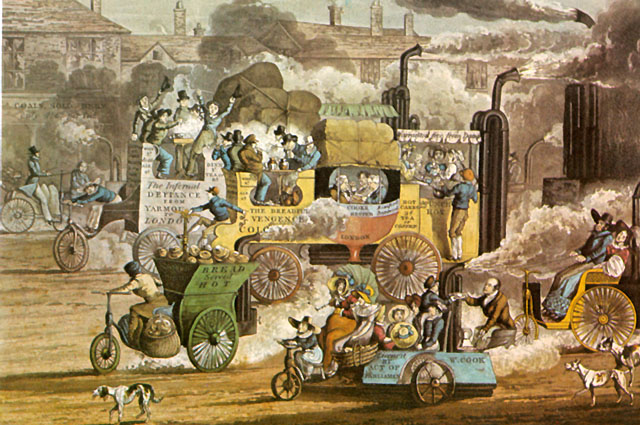
As the picture at the right shows, many attempts were being made in England by the 1830's to develop a practical vehicle that didn't need rails. A series of accidents and propaganda from the established railroads caused a flurry of restrictive legislation to be passed and the development of the automobile bypassed England. Several commercial vehicles were built but they were more like trains without tracks.
The development of the internal combustion engine had to wait until a fuel was available to combust internally. Gunpowder was tried but didn't work out. Gunpowder carburetors are still hard to find. The first gas really did use gas. They used coal gas generated by heating coal in a pressure vessel or boiler. A Frenchman named Etienne Lenoir patented the first practical gas engine in Paris in 1860 and drove a car based on the design from Paris to Joinville in 1862. His one-half horse power engine had a bore of 5 inches and a 24 inch stroke. It was big and heavy and turned 100 rpm. Lenoir died broke in 1900.
Lenoir had a separate mechanism to compress the gas before combustion. In 1862, Alphonse Bear de Rochas figured out how to compress the gas in the same cylinder in which it was to burn, which is the way we still do it. This process of bringing the gas into the cylinder, compressing it, combusting the compressed mixture, then exhausting it is know as the Otto cycle, or four cycle engine. Lenoir claimed to have run the car on benzene and his drawings show an electric spark ignition. If so, then his vehicle was the first to run on petroleum based fuel, or petrol, or what we call gas, short for gasoline.
Siegfried Marcus, of Mecklenburg, built a can in 1868 and showed one at the Vienna Exhibition of 1873. His later car was called the Strassenwagen had about 3/4 horse power at 500 rpm. It ran on crude wooden wheels with iron rims and stopped by pressing wooden blocks against the iron rims, but it had a clutch, a differential and a magneto ignition. One of the four cars which Marcus built is in the Vienna Technical Museum and can still be driven under its own power.
In 1876, Nokolaus Otto patented the Otto cycle engine, de Rochas had neglected to do so, and this later became the basis for Daimler and Benz breaking the Otto patent by claiming prior art from de Rochas.
The picture to the left, taken in 1885, is of Gottllieb Daimler's workshop in Bad Cannstatt where he built the wooden motorcycle shown. Daimler's son Paul rode this motorcycle from Cannstatt to Unterturkheim and back on November 10, 1885. Daimler used a hot tube ignition system to get his engine speed up to 1000 rpm
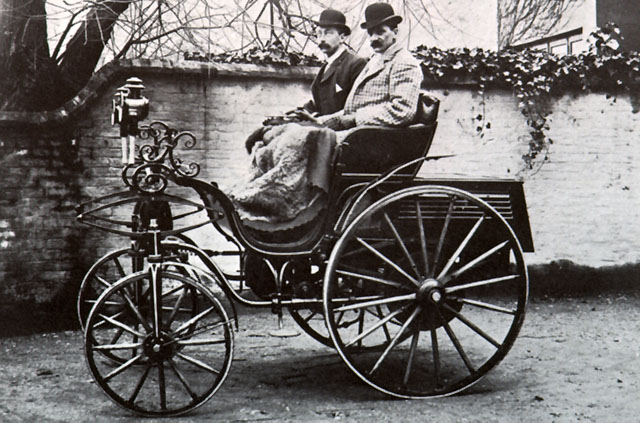
The previous August, Karl Benz had already driven his light, tubular framed tricycle around the Neckar valley, only 60 miles from where Daimler lived and worked. They never met. Frau Berta Benz took Karl's car one night and made the first long car trip to see her mother, traveling 62 miles from Mannheim to Pforzheim in 1888.
Also in August 1888, William Steinway, owner of Steinway & Sons piano factory, talked to Daimler about US manufacturing right and by September had a deal. By 1891 the Daimler Motor Company, owned by Steinway, was producing petrol engines for tramway cars, carriages, quadricycles, fire engines and boats in a plant in Hartford, CT.
Steam cars had been built in America since before the Civil War but the early one were like miniature locomotives. In 1871, Dr. J. W. Carhart, professor of physics at Wisconsin State University, and the J. I. Case Company built a working steam car. It was practical enough to inspire the State of Wisconsin to offer a $10,000 prize to the winner of a 200 mile race in 1878.>
The 200 mile race had seven entries, or which two showed up for the race. One car was sponsored by the city of Green Bay and the other by the city of Oshkosh. The Green Bay car was the fastest but broke down and the Oshkosh car finished with an average speed of 6 mph.
From this time until the end of the century, nearly every community in America had a mad scientist working on a steam car. Many old news papers tell stories about the trials and failures of these would be inventors.
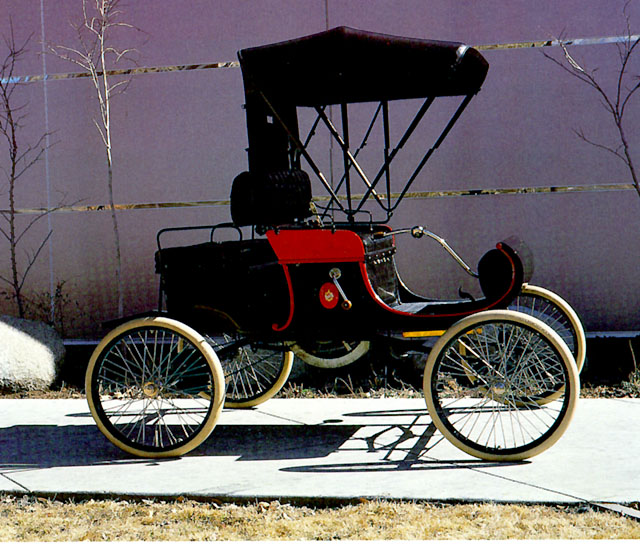
By 1890 Ransom E. Olds had built his second steam powered car, pictured at left. One was sold to a buyer in India, but the ship it was on was lost at sea.
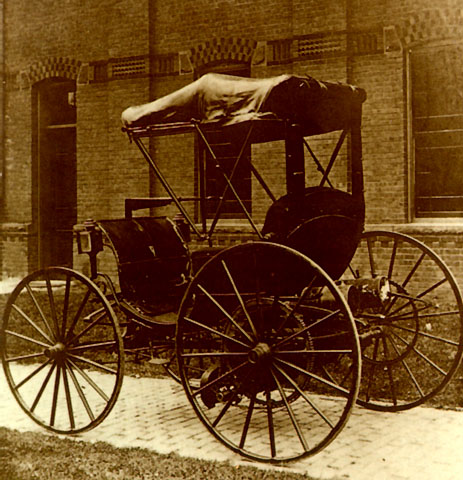
Running by February, 1893 and ready for road trials by September, 1893 the car built by Charles and Frank Duryea, brothers, was the first gasoline powered car in America. The first run on public roads was made on September 21, 1893 in Springfield, MA. They had purchased a used horse drawn buggy for $70 and installed a 4 HP, single cylinder gasoline engine. The car (buggy) had a friction transmission, spray carburetor and low tension ignition. It must not have run very well because Frank didn't drive it again until November 10 when it was reported by the Springfield Morning Union newspaper. This car was put into storage in 1894 and stayed there until 1920 when it was rescued by Inglis M. Uppercu and presented to the United States National Museum.
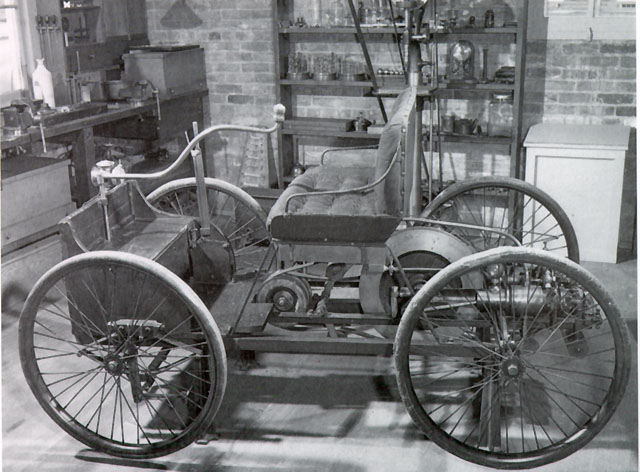
Henry Ford had an engine running by 1893 but it was 1896 before he built his first car. By the end of the year Ford had sold his first car, which he called a Quadracycle, for $200 and used the money to build another one. With the financial backing of the Mayor of Detroit, William C. Maybury and other wealthy Detroiters, Ford formed the Detroit Automobile Company in 1899. A few prototypes were built but no production cars were ever made by this company. It was dissolved in January 1901. Ford would not offer a car for sale until 1903.
The first closed circuit automobile race held at Narragansett Park, Rhode Island, in September 1896. All four cars to the left are Duryeas, on the right is a Morris & Salom Electrobat. Thirteen Duryeas of the same design were produced in 1896, making it the first production car.
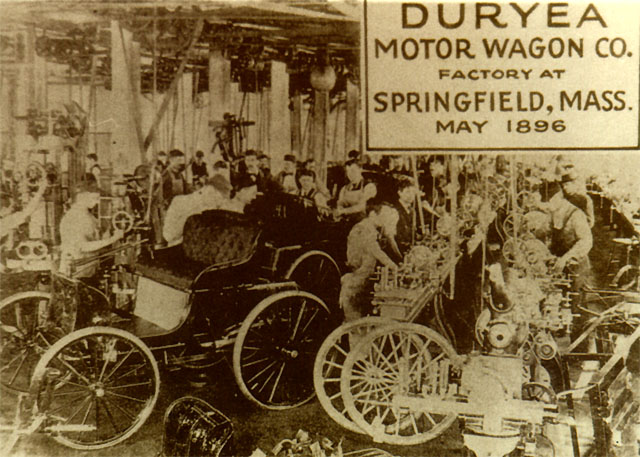
At left is pictured the factory with produced the 13 Duryeas. In 1898 the brothers went their separate ways and the Duryea Motor Wagon Company was closed. Charles, who was born in 1861 and was eight years older than Frank had taken advantage of Frank in publicity and patents. Frank went out on his own and eventually joined with Stevens Arms and Tool Company to form the Stevens-Duryea Company which was sold to Westinghouse in 1915. Charles tried to produce some of his own hare-brained ideas with various companies until 1916. Thereafter he limited himself to writing technical book and articles. He died in 1938. Frank got a half a million dollars for the Westinghouse deal and lived in comfort until his death in 1967, just seven months from his 98th birthday.
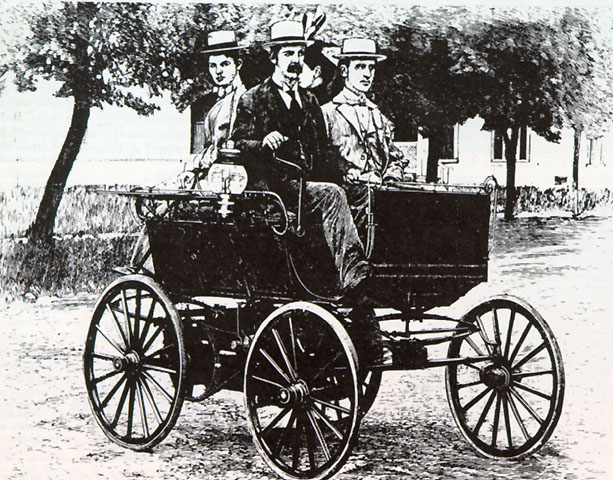
In this engraving Ransom Eli Olds is at the tiller of his first petrol powered car. Riding beside him is Frank G. Clark, who built the body and in the back are their wives. This car was running by 1896 but production of the Olds Motor Vehicle Company of Detroit did not begin until 1899. After an early failure with luxury vehicles they established the first really successful production with the classic Curved Dash Oldsmobile.
The Curved Dash Oldsmobile had a single cylinder engine, tiller steering and chain drive. It sold for $650. In 1901 600 were sold and the next years were 1902 - 2,500, 1903 - 4,000, 1904 - 5,000. In August 1904 Ransom Olds left the company to form Reo (for Ransom Eli Olds). Ransom E. Olds was the first mass producer of gasoline powered automobiles in the United States, even though Duryea was the first auto manufacturer with their 13 cars.
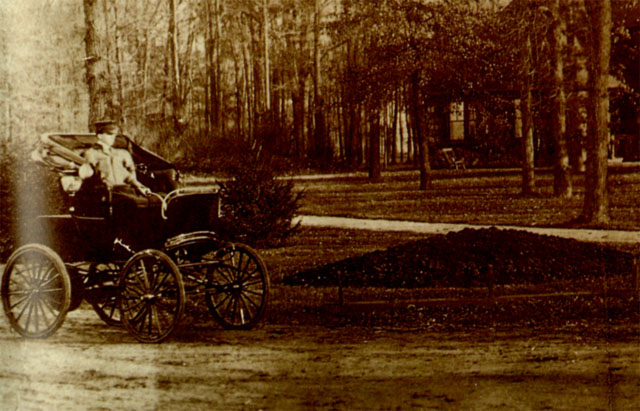
Ransom Olds produced a small number of electric cars around the turn of the century. Little is known about them and none survive. The picture at left is the only known picture of one of these rare cars. It was taken at was taken at Belle Island Park, Michigan. In 1899 and 1900, electrics outsold all other type of cars and the most popular electric was the Columbia built by Colonel Albert Augustus Pope, owner of American Bicycle Company.an interesting footnote to the Olds electric.
J. A. Koosen and H. Lawson in a 1895 Lutzmann. This is typical of American design in the mid 1890's. It was truly a horseless carriage. Tiller steering, engine under the floorboards, very high center of gravity, not designed for road travel. Imagine climbing into one of these and trying to drive across town and around a few corners. Kind of scary, huh?
This Daimler of 1899 was owned by Lionel Rothchild. The European design is much advanced of the American designs of the same time. Gottlieb Daimler took part in the London-to-Brighton run in 1896 but died in 1900 at the age of 66 without ever meeting Benz. His German engines powered the automobile industries of Britain and France.
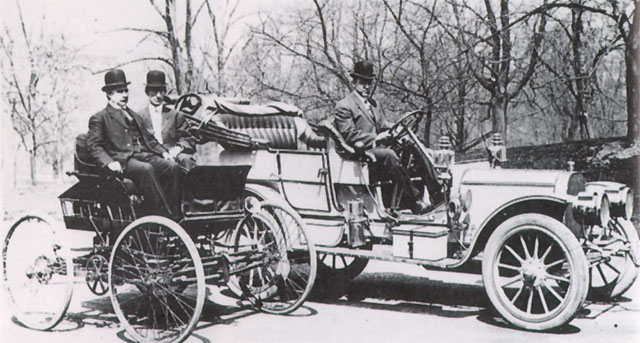
The 1908 Haynes in the back ground shows the rapid development of the petrol powered car when compared to the 1894 model in the foreground. Consider the present difference between a 1998 Tarus and the 14 year old 1984 Tarus. Some difference. Old man Haynes claimed to have build the 1894 car in 1893 but had no proof.
The Rolls Royce Silver Ghost of 1906 was a six cylinder car that stayed in production until 1925. It represented the best engineering and technology available at the time and these cars still run smoothly and silently today. This period marked the end of the beginning of the automobile.
How The Car Changed The County, Town by Town
In 1903, in Winfield, Kansas Mr. H. T. Trice is seen standing in from of the first car in town. Acutally it was more like a truck and was used to haul customers out to see land. The railroads brought potential customers to town and Mr. Trice picked them up at the depot and took them out to his new developments.
Steam power was widely used in the 1880's and 1890's on the farms of America. Cowley County had its share of these behemoths and had a large group of people with the ability to use, and the skill to fix and repair them. The smaller, less expensive automobile, with an internal combustion engine provided a new avenue of interest that was much more personal than the steam engine with its team of attendants.
Mr. Martin Baden of Winfield, Kansas and his new eight-cylinder Cadillac roadster. This car was especially built for Mr. Baden, and was equipped with all modern appliances. Driving an automobile required a high degree to technical dexterity, mechanical skill, special clothing including hat, gloves, duster coat, goggles and boots. Tires were notoriously unreliable and changing one was an excruciating experience. Fuel was a problem, since gasoline was in short supply. Mr. Baden became interested enough to become a self-taught geologist and eventually discover major oil deposits in Cowley County, Kansas, and surrounding area.
The drivers of the day were an adventurous lot, going out in every kind of weather, unprotected by an enclosed body, or even a convertible top. Everyone in town knew who owned what car and the cars were soon to become each individuals token of identity. Notice the guy at the far right fixing his flat time. The dirt roads were a challenge in any weather. By 1910 Winfield paved the downtown streets with brick, horses were no longer welcome. The mule drawn trolleys were upgraded to electric streetcars.
By 1915 racing had become a passion all over the United States. A typical local race track was at the Cowley County Fairgrounds in Winfield, Kansas. The local obsession with horse racing, started by the earliest settlers in 1870, turned to the new technology of auto racing. Local farm boys who were familiar with motors and equipment used their talents on cars and motorcycles to go faster than anyone in the county.
The horse racing facilities were quickly converted to the new, faster, more dangerous, and thus more exciting, motor racing. See Bob Lawrence's Home Page for new sections on both Auto Racing and Motorcycle Racing in Cowley County, Kansas
Eventually the automobile change the face of small town America. The town gentry bought cars, albiet fashoned to match their station in life. In Winfield, Kansas, Main Street went from a gathering place for people and horses and wagons to a parking place for the ubiquitous automobile. The Trolley Cars were displaced to make room for more cars. The brick streets were covered with asphalt to provide a smoother ride for the automobile. The old fire maps of Winfield show the inexorable spread of the automobile and all of the supporting businesses. Filling stations, auto dealers, battery stations, oil depots all grew and expanded to displace to older technologies of the day. R. B. Sandford's Winfield Carriage Works appears on the fire-map of Block 127 in 1918. But on the same spot on Block 127 in 1925 it has been replaced by a Battery Station and an Auto Storage facility.
Midway through the century, cars had become a central feature of life for young people. The cars owned by the students of Winfield High School in the fifties are typical of every where in America at that time. It was mobility, status, challenge, and social freedom. It certainly hurt our football team at the time. A typical excuse for not playing on the football team was that a student had to work to earn money to pay for their car. When asked why they needed a car, the answer was invariably: to get to work!
After a century of the automobile, we can begin to assess the effects of long term transport by internal combustion. Nearly every aspect of our lives has developed around this technology. Only now, are we seeing new digital communications technologies, of the internet and beyond, that may eventually displace some of the functions of the automobile and replace our current problems with a new set that you, our grandchildren, will be charged with solving. Ask your grandparents about their first car. I'm sure you will get to hear a great story.
The Early Electric Car Site by Galen HandyA good timeline of Automobile developmentElectric Car Companies of the World before 1940bbott's home page bbott's cars for sale page gone but not forgotten cars
Austin Business Computers, Inc.
Top 10 Most Expensive Cars in the World
Published on September 28, 2007 - 60 Comments
It is almost everyone’s dream to own a flash car, but only the super wealthy can own the flashest. This is a list of the ten most expensive cars in the world. You may be surprised to know that Rolls Royce is not on the list, nor is Bentley, Ferrari, or Lamborghini. Exclusions from the list are cars that exist as prototypes or special one-off makes. Ratings are based on US dollars.
10. Maybach 57 S $367,000
DaimlerChrysler revealed the Maybach 57 S at the 2005 Geneva Motor Show. It uses a 6.0 L version of the V12 engine manufactured by Mercedes-AMG. Power output is 604 hp (450 kW) and 738 ft·lbf (1000 N·m), providing a sub-5 second sprint to 60 mph (97 km/h). It also rides 0.5 in (13 mm) lower on 20 in (508 mm) wheels. The North American unveiling was at the Los Angeles Auto Show in January 2006. The S stands for “special” and not for “sport”.
9. Maybach 62 $385,250
The Maybach 62 includes many luxury features such as fully-reclining rear seats, Maybach 4 zone climate control, tinted, infrared-reflecting laminated glass all round, AirMATIC dual control air suspension, display instruments in rear roof liner (showing speed, time and outside temperature), folding rear tables (left and right), BOSE Surround Everywhere sound system and a refrigerator compartment.[1] The Maybach 62 also includes an array of additional features such as Cockpit Management and Navigation System (COMAND), which includes DVD navigation, CD changer in rear seats, DVD players and TV tuners front and rear, two rear LCD TV screens including remote control and two sets of headphones, automatic closing doors.
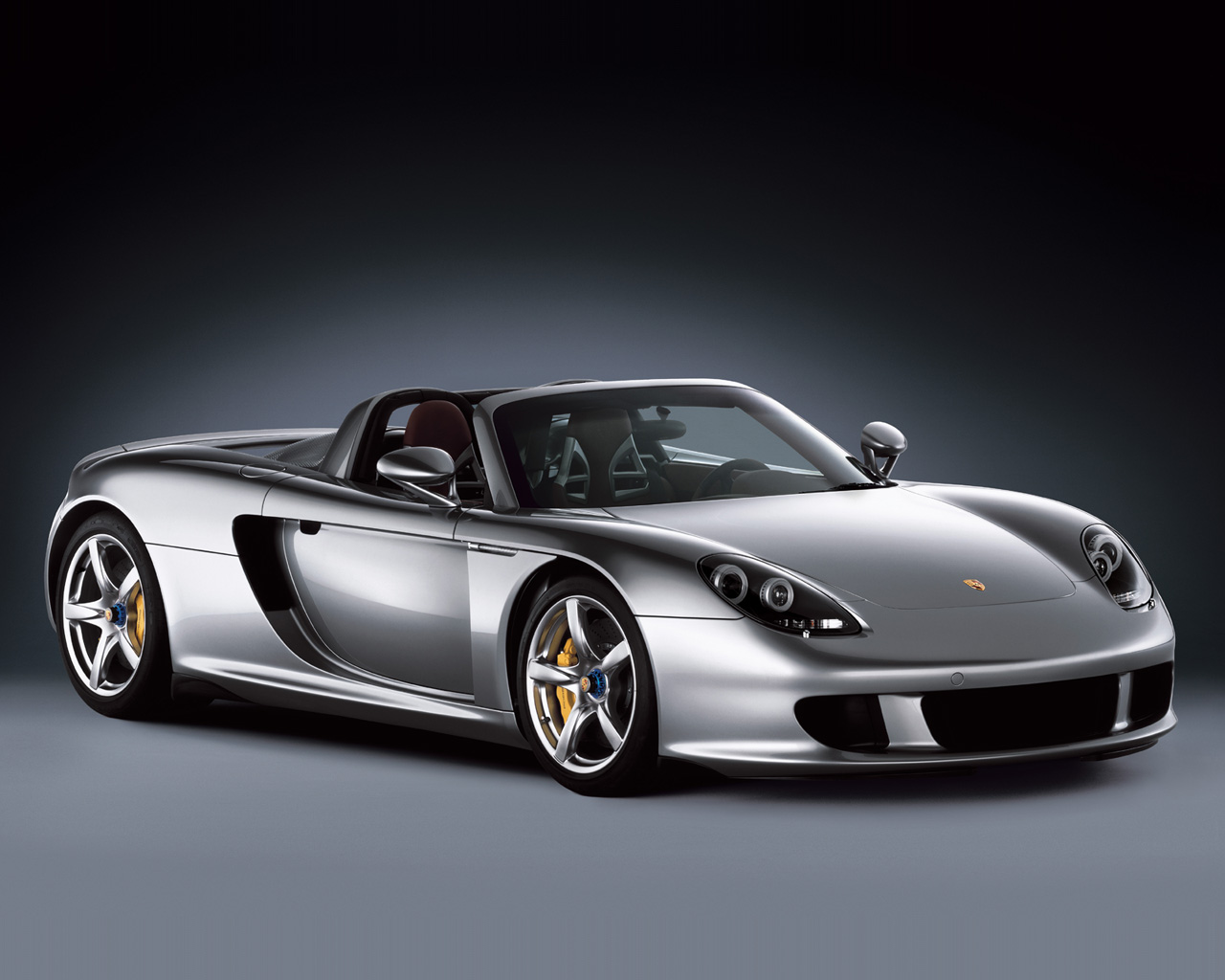
8. Porsche Carrera GT $440,000
The development of the Carrera GT can be traced back to its successors, the 911 GT1-98 and LMP1-98 racing cars. The Carrera GT is powered by an all-new 5.7 litre V10 engine producing 612 DIN (605 SAE) horsepower (450 kW) whereas the original concept car featured a 5.5 litre version rated at 558 hp (416 kW). Porsche claims it will accelerate from 0 to 100 km/h (62.5 mph) in 3.9 seconds and has a maximum speed of 330 km/h (205 mph), although road tests indicated that in reality the car could accelerate from 0-60 mph in 3.6 seconds and 0-100 mph in 7.0 seconds. The interior is fitted with soft leather. BOSE audio system and navigation systems are available as options. In typical Porsche fashion, the ignition is to the left of the steering wheel.
7. Mercedes-Benz SLR McLaren $457,250
The Mercedes-Benz SLR McLaren is a German supercar jointly developed by Mercedes-Benz and McLaren Automotive. It is assembled at the McLaren Technology Centre in Woking, England. DaimlerChrysler owns 40% of the McLaren Group. Classified as a supercar and compared to cars like the Porsche Carrera GT and Ferrari Enzo, the presence of the automatic gear box, front mid-engined arrangement and its driving characteristics lead some commentators to classify the SLR McLaren as a Super GT whose closer rivals are the Aston Martin V12 Vanquish and Ferrari 599 GTB. One of the goals of the SLR was to combine both supercar and GT characteristics.
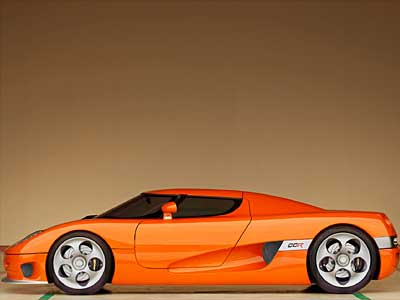
6. Koenigsegg CCR $545,568
The Koenigsegg CCR is an automobile and supercar made by Koenigsegg. Designed and manufactured in Ängelholm, Sweden, it debuted at the 2004 Geneva Auto Show. It briefly held the world speed record for a production car. The CCR took the record from the McLaren F1, which held the record for over 12 years of 386.7 km/h, set on the 9 km straight track at the VW Ehra facility in Wolfsburg, Germany. The CCR ran on the Nardò/Prototipo track, a circular track with a circumference of 12.5 km. This means that the car is driven in a constant turning motion, which makes the exercise and speed even more impressive. The steering wheel at this speed is kept at around 30 degrees of constant angle, a fairly sharp angle for the speed. On the same track, the F1 managed an unofficial record of 372 km/h.
Just paying the bills...
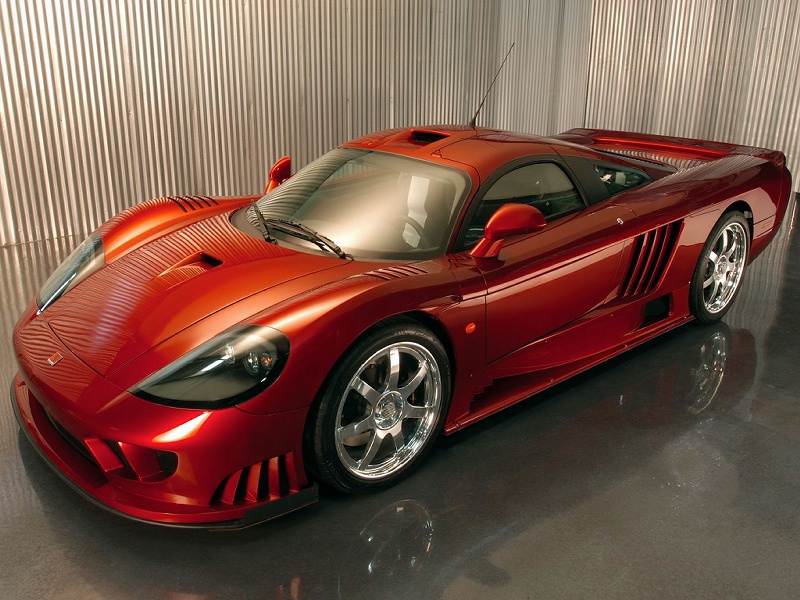
5. Saleen S7 Twin Turbo $555,000
The Saleen S7 is a limited edition, hand built coupe developed jointly by Saleen, Hidden Creek Industries, Phil Frank Design and RML, and produced solely by Saleen in Irvine, California. It is the first car produced by Saleen not based on an existing design and is considered to be the first true American production certified supercar. The S7 debuted on August 19, 2000 at the Monterey Historic Races. At this time the car was normally aspirated with 550 horsepower. In 2005, the S7 was replaced by the S7 Twin Turbo, which featured a more powerful twin-turbo system that boosted engine power to 750 horsepower (760 PS/559 kW) and the top speed to an estimated 250 mph (402 km/h).
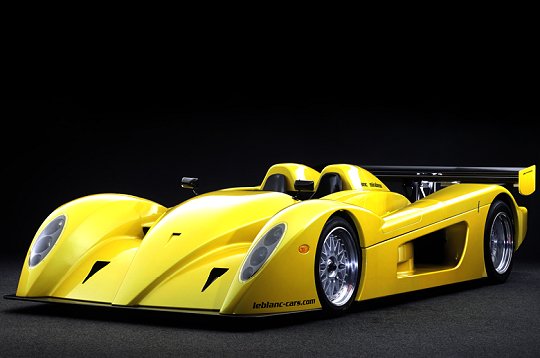
4. LeBlanc Mirabeau $645,084
Mirabeau is the newest car from Wysstec GmbH and Leblanc cars. It’s a new proposal for a racecar and prepared to FIA/Le Mans standards .The fact that it is street legal, is almost unbelievable. To reach the maximum of lightweight building and race feeling the car interior is optimized for maximum of speed and acceleration. There are some special options, including leather interior and a sequential gearbox. Power comes from Koenigsegg’s V8, the same engine found in the CCR. It is equipped with a Lysholm Screw Compressor, which has several advantages to the common centrifugal compressor.
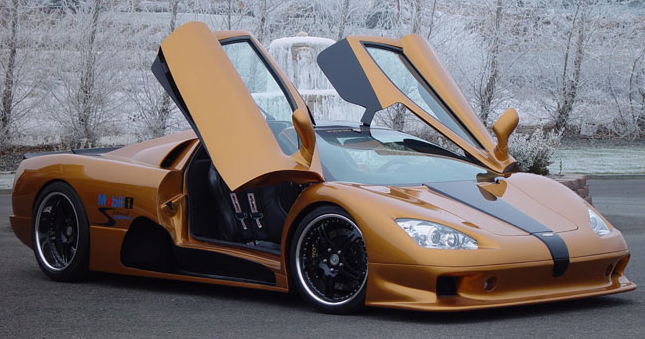
3. SSC Ultimate Aero $654,400
The American-built SSC Aero TT is a supercar built by Shelby Super Cars (SSC) in order to rival the new Bugatti Veyron with speeds of over 250 mph (400 km/h) and a 0-60 mph time of just 2.78 seconds (for the Ultimate Aero TT version). The company and vehicle are the brainchilds of Jerod Shelby, who spent over seven years designing the Aero. The car is the world’s fastest production car at 255.83 mph (411.707 km/h), a speed reportedly achieved on September 13, 2007 in West Richland, WA. The results of this test, if verified by Guiness World Records, will give the SSC Aero the world’s fastest production car title. The Aero’s styling includes the use of flip doors similar to the ones found on the Mercedes-McLaren SLR, and the Ferrari Enzo, to name a few. It uses carbon fiber and titanium extensively throughout the car, keeping the weight down to 1233 kg (for the standard Aero). For the Ultimate Aero, weight is further reduced to 1179 kg by marking the navigation system, 10-speaker audio/CD/DVD system, video/DVD screen, and back-up camera as optional equipment; and removing air-conditioning and any trunk space altogether.
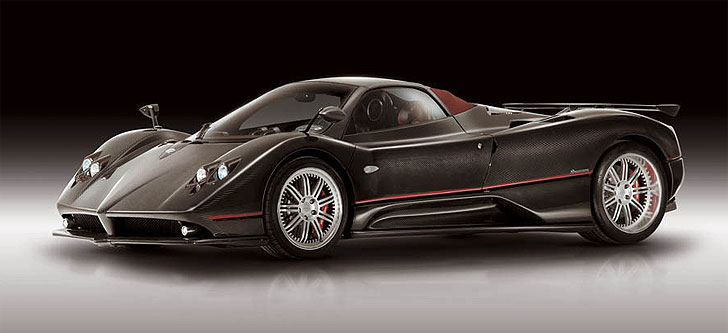
2. Pagani Zonda Roadster F C12S 7.3 $667,321
The Pagani Zonda is a supercar produced by Pagani in Italy. It debuted in 1999 and continues through the present, with production proceeding at roughly 25 cars per year. As of December, 2005, 60 Zondas had been built. It is a mid-engined 2-seat coupe and convertible. Construction is mainly of carbon fiber. The Zonda Roadster F debuted at the 2006 Geneva show. It is similar to the coupe, but with a removable carbon fibre roof and canvas side curtains weighing just 11 lb (5 kg). Production of the Roadster F is suggested at 25 units. The Roadster F is able to maintain chassis rigidity without any gain in curb weight by eschewing conventional thinking by not strengthening the sills - a process which would have needed more than 35 kg of reinforcement. Pagani instead uses racecar thinking, materials and construction techniques, strengthening the firewall structure of the chassis tub together with billet alloy braces that connect the points where the roof rails would have joined. The windscreen is also strengthened for safety reasons. These techniques enable the Roadster to have virtually the same weight as the coupe - 1230 kg (2712 lb).
1. Bugatti Veyron 16.4 $1,192,057
The Bugatti Veyron 16.4 is currently the most expensive street-legal full production car in the world, with in excess of 1001 horsepower, in either the metric or SAE scale, with its top speed of 253.81 mph (408.47 km/h). The Bugatti Veyron reached full production in September 2005. The car is built by Volkswagen AG subsidiary Bugatti Automobiles SAS in its Molsheim (Alsace, France) factory and is sold under the French Bugatti marque. It is named after French racing driver Pierre Veyron, who won the 24 hours of Le Mans in 1939 while racing for the original Bugatti firm. After the release of the car, it has been reported that while each Veyron is being sold for $1.2 million, the production costs of the car are approximately £5 million per vehicle. This is not the price to produce one vehicle, but rather the cost of the entire Veyron project divided by the number of vehicles produced at that time. As Bugatti, and therefore Volkswagen, are making such a loss, it has been likened by automotive journalist Jeremy Clarkson and his Top Gear programme team in their story on it to the Concorde, in that both were huge achievements, but the car will probably, like the plane before it, be discontinued after proving to be an economic failure.
Sources: Forbes, Wikipedia
Technorati Tags: cars, luxury
World’s Most Expensive Cars
What is the most expensive car in the world? The 1931 Bugatti Royale Kellner Coupe was sold for $8,700,000 in 1987. However, that car and many alike will not be included in this list because it is not available on the market today. It is hard to imagine someone would actually spend 8 million dollars on a car instead of using it for something more productive. However, if you have the money and the opportunity, you will definitely spend a small fraction of it to place a few of these supercars in your garage. Here is the 10 most expensive cars available on the market.
1.Bugatti Veyron $1,192,057. This is by far the most expensive street legal car available on the market today. It is the fastest accelerating car reaching 0-60 in 2.5 seconds. It claims to be the fastest car with a top speed of 253 mph+. However, the title for the fastest car goes to the SSC Ultimate Aero which exceed 253 mph pushing this car to 2nd place for the fastest car.
2.Pagani Zonda C12 F $667,321 Produced by a small independent company in Italy, the Pagani Zonda C12 F is the 8th fastest car in the world. It promises to delivery a top speed of 215 mph+ and it an reach 0-60 in 3.5 seconds.
3.SSC Ultimate Aero $654,400 Don’t let the price tag fool you, the 3rd most expensive car is actually fastest street legal car in the world with a top speed of 257 mph+ and reaching 0-60 in 2.7 seconds. This baby cost nearly half as much as the Bugatti Veyron, yet has enough power to top the most expensive car in a speed race. It is estimated that only 25 of this exact model will ever be produced.
4.LeBlanc Mirabeau $645,084 Doesn’t this look like a race car? Yet, with $645k, you can get this car and legally drive to your local supermarket and buy groceries. It has a top speed of 229 mph+ and although it was intentionally made for racing, it may be bought and show off to your neighbors.
5.Saleen S7 Twin Turbo $555,000 The first true American production certified supercar, this cowboy is rank #4 for the fastest car in the world. It has a top speed of 248 mph+ and it can reach 0-60 in 3.2 seconds. If you are a true American patriot, you can be proud to show off this car.
6.Koenigsegg CCX $545,568 Swedish made, the Koenigsegg is fighting hard to become the fastest car in the world. Currently the 3rd fastest car in the world with a top speed of 250 mph+, the car manufacture Koenigsegg is not giving up and will continue to try and produce the fastest car.
7.Mercedes-Benz SLR McLaren $457,250 A GT supercar, the SLR McLaren is the fastest automatic transmission car in the world with a top speed of 207 mph+ and reaching 60 mph in 3.8 seconds from stand still point.
8.Porsche Carrera GT $440,000 A supercar with dynamic stability control and a top speed of 209 mph+ and it can reach 0-60 in 3.9 seconds. The Porsche Carrera GT applies the absolute calibers of a true racing car to offer an unprecedented driving feeling on the road.
9.Maybach 62 $385,250 The first 4-doors sedan to make the list, the Maybach 62 includes many luxurious features and it was made for comfort rather than speed.
10.Maybach 57 S $367,000 High-end luxury saloon with sporty handling and top performance technology.
January 22nd, 2008
Home Send us a tip Advertise Contact us About us RSS
Top 10 most expensive cars in the world
Posted on 07/12/2006 under: Supercars, Featured
We are bringing you the list of 10 most expensive cars in the world. At the top of the list is of course the legendary Bugatti Veyron, most expensive, most powerful, and fastest production car in the world.
Bugatti Veyron $1,700,000The Bugatti Veyron 16.4 is the most powerful, most expensive, and fastest street-legal production car in the world, with a proven top speed of over 400 km/h (407 km/h or 253 mph). It reached full production in September 2005. The car is built by Volkswagen AG subsidiary Bugatti Automobiles SAS and is sold under the legendary Bugatti marque. It is named after racing driver Pierre Veyron, who won the 24 hours of Le Mans in 1939 while racing for the original Bugatti firm. The Veyron features a W16 engine—16 cylinders in 4 banks of 4 cylinders. According to Volkswagen, the final production Veyron engine produces between 1020 and 1040 metric hp (1006 to 1026 SAE net hp), so the car will be advertised as producing "1001 horsepower" in both the US and European markets. This easily makes it the most powerful production road-car engine in history.
Ferrari Enzo $1,000,000The Enzo Ferrari, sometimes referred to as the the Ferrari Enzo and also F60 is a 12-cylinder Ferrari supercar named after the company's founder, Enzo Ferrari. It was built in 2003 using Formula One technology, such as a carbon-fiber body, F1-style sequential shift transmission, and carbon-ceramic brake discs. Also used are technologies not allowed in F1 such as active aerodynamics. After a maximum downforce of 1709 pounds (775 kg) is reached at 186 mph (301 km/h) the rear spoiler is actuated by computer to maintain that downforce.
Pagani Zonda C12 F $741,000The Zonda C12 F debuted at the 2005 Geneva Motor Show. It is the most extensive reengineering of the Pagani car yet, though it shares much with its predecessors including the 7.3 L V12. Power is increased to 602 PS (443 kW/594 hp) with a special clubsport model producing 650 PS (478 kW/641 hp). The company promises a 3.2 second sprint to 60 mph (97 km/h, a top speed over 374 km/h (225 mph) and it will be the queen in braking from 300 km/h to 0 (186 mph to 0). The Zonda F clubsport has a power to weight ratio of 521 bhp/ton (384 W/kg) . Compare, for example, the Enzo Ferrari which has a power to weight ratio of 483 bhp/ton (356 W/kg).
Koenigsegg CCX $600,910The Koenigsegg CCX is the latest supercar from Koenigsegg. CCX is an abbreviation for Competition Coupe X. The X commemorates the 10th anniversary of the completion and test drive of the first CC vehicle in 1996. The CCX is intended to be more suitable for the U.S. market and thus engineered to comply with US regulations. The CCX is powered by a Koenigsegg designed and assembled, all aluminium, 4700 cm³ DOHC 32-valve V8 based on the Ford Modular engine architecture enhanced with twin Rotrex centrifugal superchargers with response system, 1.2 bar boost pressure and an 8.2:1 compression ratio. The engine produces 806 hp (601 kW) and 678 lbf.ft (920 Nm) on 91 octane (U.S. rating) gasoline, 850 hp (634 kW) on 96 octane (Euro rating) gasoline and 900 hp (671 kW) on biofuel.
Porsche Carrera GT $484,000The Porsche Carrera GT is a supercar, manufactured by Porsche of Germany. The Carrera GT is powered by an all-new 5.7 litre V10 engine producing 612 SAE horsepower (450 kW). Porsche claims it will accelerate from 0 to 100 km/h (62.5 mph) in 3.9 seconds and has a maximum speed of 330 km/h (206 mph), although road tests indicated that in actuality the car could accelerate from 0-60 in under 3.5 seconds and to 0-100 in 6.8 seconds and has a top speed of 335-340km/h (209-212.5mph).
Mercedes SLR McLaren $455,500The Mercedes-Benz SLR McLaren is a sports car and supercar automobile co-developed by DaimlerChrysler and McLaren Cars. It is assembled at the McLaren Technology Centre in Woking, England. Most people presume "SLR" to stand for "Sportlich, Leicht, Rennsport" (German for "Sport; Light; Racing"). The car's base price is £300,000 or $455,500. The SLR has a supercharged 5.5 (5439cc) litre dry sumped 90 degree V8. It produces 466.8 kW at 6500rpm (626 hp) and 780 N·m (575 ft·lbf) torque at 3250 - 5000 rpm.
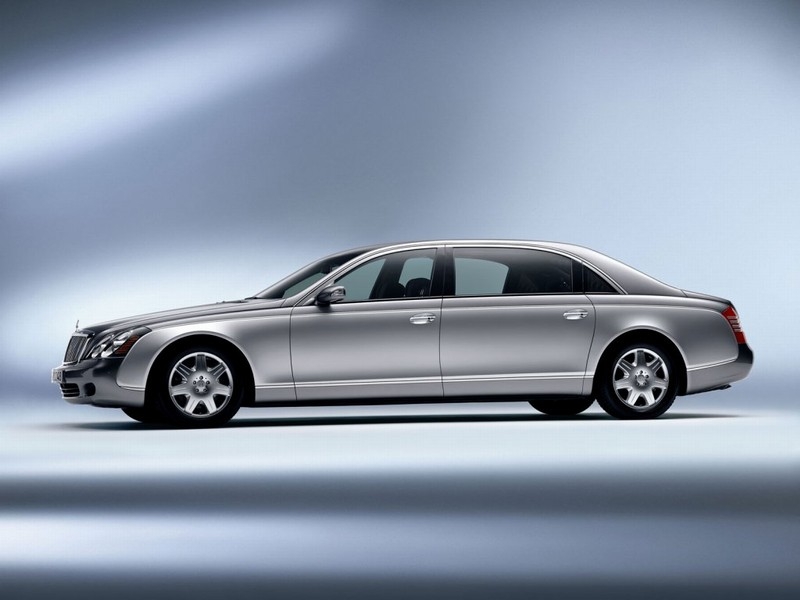
Maybach 62 $385,250The Maybach 57 and 62 were the first automobile models of the Maybach brand since the brand's revival by DaimlerChrysler. They are derived from the Mercedes-Benz Maybach concept car presented at the 1997 Tokyo Motorshow (which was based on the Mercedes-Benz S-Class sedan). DaimlerChrysler attempted to buy the Rolls-Royce/Bentley marque when Vickers offered the company up for sale. When this attempt failed (they were outbid by BMW and Volkswagen respectively) they introduced the Maybach as a direct challenger in 2002. Both models are variants of the same ultra-luxurious automobile. The model numbers reflect the respective lengths of the automobiles in decimetres; the 57 is more likely to be owner-driven while the longer 62 is designed with a chauffeur in mind. The engine is a Mercedes-sourced 5.5-liter twin-turbo V12, generating 550 hp.
Rolls-Royce Phantom $320,000The Rolls-Royce Phantom is a luxury saloon automobile made by Rolls-Royce Motor Cars, a BMW subsidiary. It was launched in 2003 and is the first Rolls-Royce model made under the ownership of BMW. It has a 6.8 L, 48-valve, V12 engine that produces 453 hp (338 kW) and 531 ft·lbf (720 N·m) of torque. The engine is derived from BMW's existing V12 powerplant. It is 1.63 m (63 in) tall, 1.99 m (74.8 in) wide, 5.83 m (228 in) long, and weighs 2485 kg (5478 lb). The body of the car is built on an aluminium spaceframe and the Phantom can accelerate to 60 mph (100 km/h) in 5.7 s.
Lamborghini Murcielago $279,900The Lamborghini Murciélago is a GT and supercar automobile made by Automobili Lamborghini S.p.A. and designed by Luc Donckerwolke. It was introduced in 2002 as the successor to the Diablo. The body style is a two door, two seat coupé. The LP640 version was introduced at the Geneva Motor Show in March of 2006. It features a 6.5 L engine, now producing 640 bhp, improving performance substantially. There were also a few minor external changes, primarily to the low air intakes.
Aston Martin Vanquish $255,000The Aston Martin V12 Vanquish is a supercar manufactured by Aston Martin since 2001. It rose to fame after being featured as the official James Bond car in Die Another Day, the twentieth James Bond film. In the film, the Vanquish has the usual Bond film embellishments, including active camouflage which rendered the vehicle virtually invisible. The Vanquish is powered by a 5.9 L (5935 cc) 48-valve 60° V12 engine, which produces 343 kW (460 hp) and 542 N·m (400 ft·lbf) of torque. It is controlled by a fly-by-wire throttle and a 6 speed 'paddle shift' or semi-automatic transmission. A special V12 Vanquish S debuted at the 2004 Paris Auto Show with the power upped to 388 kW (520 hp) and 577 N·m (426 ft·lbf).Source: AutoMotoPortal.com/Wikipedia
Submit comment E-mail this to a friend View article photos
Bookmark with: Delicious reddit Facebook StumbleUpon
Previous and next articles
« Toyota turns up the motor show heat with first indoor F1 test
» smart goes electric
Article photos
Related articles
No related articles.
Previous articles
» Toyota turns up the motor show heat with first indoor F1 test» Volvo XC90 Sport - a new version of Volvo’s successful SUV» One milionth Ford Focus stars at British Show» New Ford Transit arrives in Ford showrooms» Lyons and tigers conquer at Goodwood
home about us contact us RSS add to favorites
All contents copyright © 2006 - 2008 AutoMotoPortal.com. All Rights Reserved.
_uacct = "UA-63707-7";
urchinTracker();








2 comments:
I have seen this blog and i really appreciate and learned a lot. its amazing!!!
wow fantastic!!!
Post a Comment